How to keep Camelot Macaw happy and healthy reaches breeding maturity. They hatch their eggs in 26 to 28 days and generate a clutch size in 2 to 3 days. More than 16 weeks pass until the juvenile birds fledge. Moreover, the odd thing about these birds is that it is impossible to tell their gender just by looking at them. When determining a Camelot macaw’s gender, DNA testing is occasionally employed.
A Talking Bird
How to keep Camelot Macaw happy and healthy is a fantastic fit if you’re seeking a simple bird to train vocally. The words, phrases, melodies, and other sounds that humans use regularly can help macaws build a robustvocabulary. They are advantageous and disadvantageous since they can readily imitate noises in the home. Their sounds are like a ringing phone or a child’s toy, which can bother many owners. However, they may also pick up friendly phrases like “hello” or “goodbye” from their owners.
Common Medical Issues
How to keep Camelot Macaw happy and healthy Like every living thing, Camelot macaws also face some medical issues. There are a lot of diseases that a Camelot macaw can suffer from, and these diseases comprise diarrhea, beak malformation, papilloma, kidney disease, etc. A regular visit to the vet will help you prevent these diseases. Surprisingly, a behavioral issue with this bird also causes the medical issue. Epidermal issues irritate this bird most as it plucks its feathers, which sometimes cause severe skin infections. Moreover, a proper and balance diet is essential, and a person can find his bird healthy if he takes proper care of the parrot’s feed and provides it with a specific exercise space.
Diet & Nutrition
How to keep Camelot Macaw happy and healthy and fruits, nuts, seeds, insects, and other similar things are part of their natural diet. Their primary source of nourishment needs to be a high-quality commercial macaw diet. As supplements, tree nuts and modest amounts of fresh fruit should be included in the diet. Combining at least two different kinds of seed and pellet combinations is recommended to ensure they get adequate nutrients. If specific vitamins and minerals are missing from their diet, Camelot macaws are more likely to experience health problems.
Identification and Parentage
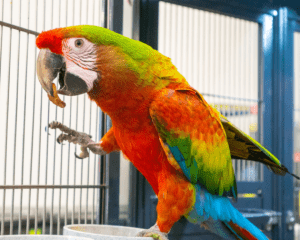
How to keep Camelot Macaw happy and healthy is a second-generation hybrid macaw, resulting from the crossbreeding of a Scarlet Macaw and a Catalina Macaw, with the dominant gene from the father influencing its coloration and appearance. This strikingly beautiful macaw species inherits traits and characteristics from both of its parents, creating a unique blend of features.
The Camelot Macaw is known for its vibrant and visually appealing coloring, which is a result of the Scarlet Macaw’s contribution. As a hybrid macaw, it’s bred specifically for its vibrant colors, making it a popular choice among macaw enthusiasts.
Proper socialization is crucial for the care of Camelot Macaws. They require a firm and consistent hand in training to ensure their well-being and development. Good socialization and training are particularly important as they mature, as the behavior and temperament of hybrid macaws can be unpredictable. Despite this, the Camelot Macaw can have a gentle and affectionate nature, making it a rewarding pet for those who invest time and effort into its care.
In terms of appearance, the Camelot Macaw exhibits a mix of traits inherited from both the Scarlet Macaw and the Catalina Macaw. Its vibrant colors and unique blend of features make it visually stunning. To see photos of hybrid macaws, including the Camelot Macaw, you can visit the Hybrid Macaws page.
Camelot Macaw Facts
Hybrid macaws like the Camelot Macaw are bred for their vibrant colors and are a popular choice among macaw enthusiasts. The Camelot Macaw is known for its striking beauty and is a mixture of different macaw types. It’s a second-generation hybrid macaw resulting from a crossbreeding between a Scarlet Macaw and a Catalina Macaw.
The Scarlet Macaw contributes to its beautiful coloring, and the dominant gene from the father influences its coloration and appearance. The Camelot Macaw inherits traits and characteristics from both of its parents, resulting in a mix of traits and behaviors. Proper socialization is important for Camelot Macaws, as they require a firm and consistent hand in training. Good socialization and training are crucial as they mature.
Despite their beauty, the behavior and temperament of hybrid macaws can be unpredictable, so it’s essential to provide them with the necessary socialization and training. The Camelot Macaw can have a gentle and affectionate nature and can also possess the speaking ability of the Blue and Gold Macaw.
Care Guide
To properly care for a Camelot Macaw, socialization and training are crucial. These birds require a firm and consistent hand in their training, as they can have a gentle and affectionate nature.
Good socialization and training are particularly important as they mature, and they may even possess the speaking ability of the Blue and Gold Macaw.
Socialization and Training
Proper socialization and training play a vital role in shaping the behavior and development of the Camelot Macaw. As a hybrid macaw, the Camelot inherits traits and behaviors from both its Scarlet Macaw and Catalina Macaw parents.
Good socialization is essential as they mature, ensuring they develop a gentle and affectionate nature. Training should be firm and consistent, providing the Camelot Macaw with clear boundaries and expectations.
It’s worth noting that the Camelot Macaw can also possess the speaking ability of the Blue and Gold Macaw. Therefore, incorporating speech training into their routine can result in a well-rounded and interactive pet.
Speaking Ability and Behavior
The speaking ability and behavior of the Camelot Macaw can be influenced by its parentage and training. Being a hybrid macaw, it inherits traits and behaviors from both its Scarlet Macaw and Catalina Macaw parents. The Camelot Macaw has the potential to possess the speaking ability of the Blue and Gold Macaw, which is known for its impressive vocabulary and clarity of speech.
However, the individual bird’s speaking ability can vary depending on its genetics and training. Proper socialization and training from a young age are crucial to develop good speaking skills in the Camelot Macaw. By providing consistent and positive reinforcement, you can encourage the bird to mimic and learn words and phrases. It is important to note that not all Camelot Macaws will have the same speaking ability, as it can vary
Common Medical Conditions
Conditions Requiring Veterinary Attention
Malnutrition
- Malnutrition is a common condition in macaws because of misinformation of dietary requirements.
- Common conditions associated with malnutrition include low protein, low calcium and low red blood cell count.
- Malnourished macaws may be lethargic, thin, dehydrated and are often at risk for seizures, pathologic fractures and infection.
- Treatment involves supportive care and correction of the underlying dietary deficiencies.
Obesity
- Obesity is common in many captive macawss fed a diet too high in fat or sugar and a lack of exercise.
- Obesity can lead to diseases of the heart, liver and pancreas. It can also cause fat deposits to form on the eyes, especially in juveniles if the mother is fed a diet high in fat.
- Treatment consists of increasing exercise and change in diet.
Stress
- Stress in macaws can result in self-mutilation of feathers, legs, or wings, as well as respiratory distress, and even death.
- Providing proper nutrition and hygiene, normal social groupings, appropriate protection from potential predatory animals can help reduce stress.
Trauma
- Trauma, including bite wounds from dogs and cats, are common and potentially fatal injuries for macaws.
- Macaws can also be injured by household activities such as falling from heights, chewing on electrical cords, or being stepped on.
Emergency / Critical Care
- All emergencies require veterinary assistance. Use the following guidelines to assist you in caring for your pet until you can contact a veterinarian.
Traumatic Injuries
Broken Bones
- Provide your pet with soft bedding such as a towel or blanket.
- Remove all perches and place in a small container/cage.
- Minimize handling.
- Keep your pet in a warm, dark, and quiet area.
- Keep your pet as calm as possible and contact a veterinarian or local animal emergency clinic immediately.
Skin Injuries/Blood loss
- For any type of injury with blood loss, use direct pressure with a towel or clean gauze to prevent further blood loss. Contact your veterinarian immediately if you are unable to stop the bleeding.
Severe Illnesses and Other Conditions
Head Injuries and Head-Tilt
- Provide your pet with soft bedding such as a towel or blanket.
- Minimize handling.
- Remove perches and place in small container/cage.
- Keep your pet in a warm, dark, and quiet area.
- Keep your pet as calm as possible and contact a veterinarian or local animal emergency clinic immediately.
Respiratory Distress
- If your macaw experiences open-mouth breathing or gasping for air, remove all bedding and minimize handling and stress.
- Keep your macaw in a comfortable, dark, and quiet environment until you are able to reach your veterinarian or local animal emergency clinic.
Egg Binding
- If your macaw experiences any straining, sits at the bottom of the cage, is fluffed or lethargic, then it may be trying to lay an egg.
- Eggs can also put pressure on the nerves that control the legs and cause paralysis or self-mutilation.
- Keep your pet in a warm, dark, and quiet area.
- Keep your pet as calm as possible and contact a veterinarian or local animal emergency clinic immediately.