Parrot Breeding Basics Is It Parrot-Egg Time? Is your bird acting funny? Mine is. This is Lorenza, a Yellow-naped Amazon. She walks around the house and finds empty nesting boxes lately- sometimes she bites the wood, other times she tries to go in, even if they are too small. In Lorenza’s case, I don’t want her to lay eggs! She has no male Amazon to fertilize them and Amazons are aggressive breeders. Not sure I want that for her. So, she has no bed or box in her cage, where she sleeps at night (she’s out most of the day).
Parrot Breeding Basics If you have outdoor birds, spring may bring a change in your bird, making him or her unrecognizable! Males get super defensive, females too, and the hens start to hide out in their nesting box or cozy. Both are busy and no longer have time for you, because they are playing house 🏠!
Is A Male Parrot Required?
Parrot Breeding Basics Is A Male Parrot Require Female parrots do not need a male to lay eggs, but they generally do require a good diet and a space to nest. Parrot Breeding Basics Some birds will use their food bowl if they have nothing else. Generally speaking, if you don’t want them to lay eggs, because it taxes their body, (since it takes energy and a lot of vitamins and minerals from them) and stresses them out, there are a couple things to do.
No Expectations: 🥚 How To Avoid Eggs
Parrot Breeding Basics You can remove eggs as they are laid, which is a little sad. They look surprised, frantic when the eggs disappear (if you do this, I recommend making sure they don’t see you doing so). People sometimes replace the eggs with plastic or wood eggs, so that they don’t hatch. Parrot Bree ding Basics This way the hen gets to sit on her clutch of eggs, and eventually she’ll give up because they didn’t hatch.
You can also provide no nesting box, though our budgie simply flew to another parrot’s cage and claimed the cozy (a fabric ‘tent’ for them to sleep in) and cage for herself; when I gave her the cage, because she kept insisting, she laid her eggs. So, some birds just want to be parents.
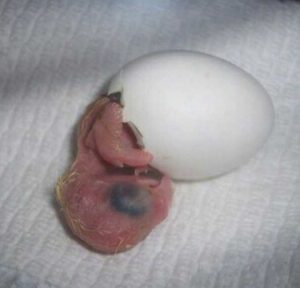
Parrot Breeding Basics Seeing the eggs and then seeing tiny, naked dinosaurs is amazing! Parrots are born naked (people keep offering to knit sweaters for the babies – LOL!) It provides a unique perspective on the miracle of life, except there’s no expensive human-hospital bill, no crying in the middle of the night and no diapers to change! The mom-parrot handles it all, generally with the support of her mate.
🐣 Do I Recommend Breeding?
If you are comfortable and you find that you are living the Parrot Life, then you may love breeding parrots. There are certain animals that are more than a pet, they are a lifestyle, and having parrots means you take on a Parrot Life. Farm animals, like horses, and parrots, take a lot of time and dedication to care for physically (food, cleaning) and emotionally (bonding, mentally stimulating/training and engaging them).
To give you a good idea of what it’s like:
Parrot Breeding Basics birds means you have to understand the additional dietary needs for breeding; you also have to be ready tohelp a parrot hen who is egg-bound (means that she can’t get the egg out of her vent, it’s stuck). You also want to learn about the babies so that you recognize signs of abandonment by the parents, which means you may need to take over and offer heat and round-the ⏰ clock feedings!
Breeding parrots can be a spectator sport or a rather involve chore. So, if you enjoy your Parrot Life and want more of it, try breeding. If not, I’d avoid it. Keep your males and females separate.
How Many Eggs In A Parrot’s Nest?
How Many Eggs In A Parrot’s Nest?
Parrot Breeding Basics Eggs can have different shapes – they can be more oval or tear-drop shaped. Depending on the kind of parrot you have, 3 to 6 eggs is a ‘normal’ clutch size. A rule of thumb is that the smaller the bird, the more often they breed and the more they tend to have larger clutches. Larger birds tend to lay less often and lay less eggs. For example, finches (which are not hook bills) tend to lay eggs one clutch right after another with 4 to 6 or more eggs. If you let them, they will produce several clutches per year – easily over 20 babies. Palm cockatoos, as a sharp contrast, only produce a clutch every couple of years – usually with only one egg.
Again, these are the ‘extremes’ just to give you an idea of how many eggs and how often a parrot produces. Most parrots produce twice a year only, since they are not as small as finches.
How Long & How Do I Know?
Parrot Breeding Basics Most parrots eggs incubate for 22 to 28 days, once the hen has begun incubating her eggs. A hen will often wait until she has 2 eggs to start to sit on them, incubating them.
At 7 days of incubation (we always give it a couple more days) you can start to “candle the eggs” to see if your hen’s eggs are fertile.
Take her eggs out (we like to do it when she’s out of her nest eating) and, using your flashlight on your phone, gently hold the egg up to the light.
The photo shows a ‘clear’ egg, which means that even though she has incubated the egg (it’s warm to the touch because she’s been sitting on it) for over 7 days, it is infertile. If her egg were fertile it would not have a light yellow color. Instead veins start to form, literally lines on the walls. The yellow also gets darker as the days go by. Around 3/4 of the way through incubation, you can start to see a little birdie-body!
Egg Problems
Sometimes you’ll find abroken egg, or part of one, in the nest or in your parrot’s cage. If an egg is too soft, she may lack the minerals and calcium (especially) she needs to make a strong-enough egg. It can also be that the parrot-parents are breaking the eggs, which they do when they do not feel it is safe to have babies. In this case, they are too stresse, you can try moving their cage to a quieter, ‘safer’ space.
Touch the broken egg shell. If it is soft, make sure to provide a mineral block and calcium. This can be as easy as baking your breakfast egg shells. Rinse them and then bake them in an oven until they are dry, then grind them up and add them to your parrot’s veggies (which they tend to eat more of when they are breeding) or in a separate dish by themselves.
You may also notice that part of the shell is gone. This is because hens can eat the shell, re-absorbing the calcium which they will need for themselves or for their next egg.
So your parrot has laid an egg, now what do you do?
If yours is a single female parrot, and there is no chance that this is a viable egg, let her keep it (or them) for a few days. She may choose to incubate and turn it, like a doting mom, and might lose her interest after a while, and if she doesn’t, take it away from her in her absence. Removing the egg immediately will only serve to cause her to lay more to replace it instinctually, which can lead to health problems. Some choose to remove the eggs right away and replace them with similar sized pebbles or plastic eggs. Strangely, they often don’t seem to notice and continue to incubate them.
The shell of an egg is made primarily of calcium that comes directly from calcium stores in the female’s body. Their bones and muscles provide almost all of the calcium need to produce the shell. Excessive or chronic egg laying can profoundly deplete the body’s calcium (hypocalcemia) causing improper body function. Hypocalcemia can lead to egg binding, where the uterine muscles do not expel the egg . It can also cause seizures and brittle, easily fractured bones.
So what do I do if my parrot has eggs?
There is one simple answer to this….. Leave them! Simply leave them to it they WILL get bore in time. If you take away any eggs your parrot lays it will just trigger them to lay more. If you wish you can purchase false eggs to do a swap with so the eggs don’t go rotten and smell. But be aware that your parrot may not like the false eggs and lay more.
Different species are “program to lay a certain amount ofeggs let’s say it’s 3. If you then take away one egg they will be force by nature to lay one more to make 3. This will just take its toll on calcium levels for unnecessary reasons. It will also increase the risk of egg binding which can be fatal. Parrots DON’T need boxes to lay eggs either; if they are determine they will lay them ANYWHERE! So if your parrot is suddenly possessive over the back of the sofa then check for eggs that may be present.
How does it work?
This depends entirely on your parrot and what motivates them. Some like nothing more than hearing their human laugh, more commonly food is the motivator. Pele my Senegal loves nothing more than a round of applause after hearing the clicker however, Sid my cockatiel is motivate by favourite seeds.
Introducing your bird to the clicker! Start small!
Introduce the clicker by asking your bird to do something that they already do well. This could be a high five, a hand shake, step up etc. With your clicker in one hand and your reward close by give the verbal command. As soon as the bird performs the action use your clicker, then offer a reward.
Parrot Breeding Basics Initially your bird won’t make the connection but repeat this activity by alternating familiar commands until your bird reacts positively as soon as they see the clicker. My bird’s positive reaction is to spinexcitedly as soon as he sees me getting the clicker out of the draw. Pele is so keen on the clicker that he has been know to find and steal the clicker so that he can ‘click’ it himself in the hope of a reward!
Remember our aim up to this point is to teach your parrot that the clicker means lots of attention, fun and treats!
Why do we need a verbal command?
Parrot Breeding Basics Your birds first language is not English and like anyone learning a new language they have to understand what key words mean. For example in French lessons you might have learnt that ‘Masion’ means house by being show a picture of a house. Clicker training swaps pictures for clicks. Whatever verbal cue you choose to use for this new behaviour means nothing to your bird however, your bird does know that a click means “well done” and getting it right means getting a reward. Therefore, they will quickly learn what the verbal command is asking them to do and once this happens, you will not need to use the clicker for this behaviour!
IN PRACTICE
Training should always be FUN! You want your bird to succeed and enjoy the time you spend together for this to happen they need to be able to achieve what you are asking of them. Before you attempt to train your bird think carefully about the behaviour and break it down into smaller steps, you may not realise how many individual actions go into the simplest behaviours. Each step should be taught in sequence and fully understand before moving onto the next one. Try this at home using a human companion: Decide on a simple task you want your companion to do for example sitting down on one particular chair. Now without touching, speaking or using hand gestures