e Hybrid Macaws care guide there is something that is just absolutely captivating and universally enamoring about macaws. Their size and long tails, personalities, and vibrant coloring is all aspects of this group of New World birds that have led them to be one of the most adored in the world.
Hybrid macaws is ones that bred in captivity and is you guess it, the product of parents from two different species. For example, a Scarlet and a Blue and Gold macaw produce what is called a Catalina macaw.
A hybrid macaw lover will likely tell you that they bought a hybrid for two main reasons: color and temperament. And crossing two beautiful birds will create an even more beautiful bird! The colors on a hybrid are quite a sight to look at—just look at any of the photos in this article!
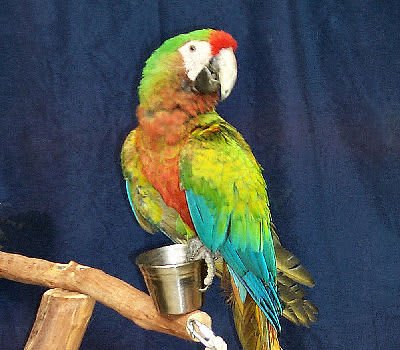
Shamrock Macaw
The Shamrock macaw is a cross between a Scarlet and a Military macaw. Since both is naturally bred and non-hybrid, the Shamrock is consider a first-generation breed. It is also probably the most common hybrid.
Shamrock macaws tend to bond closely to one person but, like all of these birds, can be socialize at a young age and become one that enjoys the whole family.
Shamrocks can be very noisy a trait inherited from their parents. They grow up to two pounds and reach sizes from 33 to 37 inches, from their head to the tip of their tail.
The Catalina macaw is a cross between the Blue and Gold and Scarlet, two very common kinds. This is another example of a first-generation hybrid macaw. They is name after the Southern California island where they were first bred.
Catalinas are said to be popular because the two personalities of their parents mixe well. The feisty to an extent, of course Scarlet, the comical Blue and Gold, and the energy of both create a perfect balance.
One downside to the Catalina macaws is the amount of constant attention need. Scarlets and Blue and Golds both need plenty of interaction, which means that the Catalina needs even more! Failure to do so will result in a nasty, screaming, biting macaw.
The Harlequin macaw is a cross between a Blue and Gold and a Greenwing. This is another first-generation hybrid. Because the Greenwing and the Scarlet look very much alike, and the other mate is the Blue and Gold, the Catalina and Harlequin are extremely alike in looks. Size, personality, and intelligence are what can tell the two apart!
Because the Blue and Gold and the Greenwing are consider to be two of the smartest large macaws (the Greenwing is usually consider to be the smartest overall), the Harlequin is highly intelligent. On top of learning tricks and words easily, they love to interact and need socialization with multiple people on a daily basis to remain healthy.
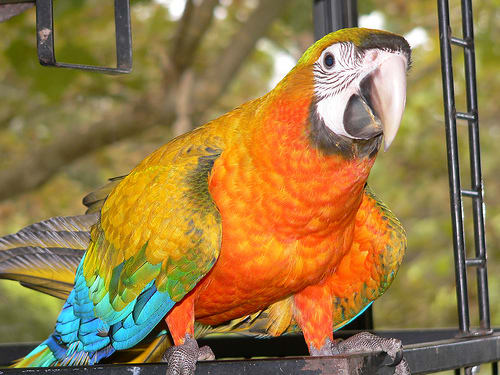
Camelot Macaw
The Camelot macaw, pronounce cam-a-lot, is an example of a second-generation macaw. It is a cross between a Catalina (which is a cross between a Scarlet and Blue and Gold) and a Scarlet macaw. As you may have figur out, the Camelot is 75% Scarlet and 25% Blue and Gold, roughly speaking. Therefore, the Camelot is strikingly similar to the Scarlet. We’re collaborating with our sister site ParadePets for a weekly dose of pawsitivity.”Every Sunday you’ll receive expert advice from veterinarians and pet trainers along with heart-warming and pet content.
Hybrid Macaws care guide
The blue-and-gold macaw is aptly name with a gorgeous blue body and dark lemon-yellow chest. This is a bird that’s hard to miss. It also refer to as the blue-and-yellow macaw. This is a large parrot with long tail feathers and mainly blue and yellow in color. The forehead is green the upper part of the body a brilliant blue. The sides of the neck and body is golden yellow. These macaws also have black around chin and cheeks, and the nake skin of cheeks is pinkish-white with lines of very small, isolate black feathers. The blue and gold macaw has a strongly hook beak and feet 2 toes that point forward and 2 toes that point backward.