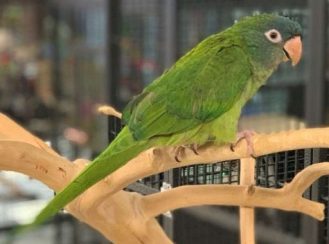
Cherry-headed conure or red-masked conure is a medium-sized, intelligent, and loveable parrot, famous for its clownish antics. This bird is easy to train and is considered one of the most talkative birds among conures. However, its loud nature makes it unsuitable for apartment living.
Origin and History
The cherry-headed conure is native to South America, inhabiting a narrow range from southwestern Ecuador to northwestern Peru. It primarily resides in jungles and deciduous forests, but it can also thrive in semiarid regions and suburban areas.
In various locations, pet birds that escape or were release into the wild have form feral breeding populations. The movie “The Wild Parrots of Telegraph Hill” popularize a group of feral cherry-head conures in San Francisco. Other feral populations are found in parts of California, Texas, and Florida.
The cherry-head conure is a popular pet. In 1994, it was classifier as “near-threaten for extinction by the International Union for Conservation of Nature (IUCN) due to habitat loss and illegal pet trade trapping.
Temperament
Cherry-headed conures are known to be intelligent, fun-loving birds that thrive on interaction with their owners and respond well to training. They are playful, affectionate, and entertaining. These birds love being the center of attention and will go to great lengths to achieve it.
Like all conures, cherry-headed conures are loud and scream intermittently. Although not proficient talkers, they charm with their playful personalities and comical antics.
Speech and Vocalizations
Conures, as a group, are not fluent talkers like some other articulate parrots. However, the cherry-headed is among the most talkative conures, capable of learning a limited vocabulary. Even non-talking cherry-headed conures are very chatty with their natural vocalizations.
This bird is unsuitable for apartment living or owners sensitive to noise, as it tends to scream intensely, particularly at sunrise and sunset.
Cherry-Headed Conure Colors and Markings
The cherry-headed conure has dark green feathers covering most of its body, with a distinctive splash of red on its face and head. In some individuals, red spots extend down the neck. The birds also have another splash of red on the tops of their wings. They have bare white eye rings, horn color bills, and gray feet. Their beauty makes them highly prize as pets.
Caring for a Cherry-Headed Conure
The cherry-headed conure should have an ample cage—at least 24 inches long and wide and 36 inches in height. Bars should be no more than 1 inch apart. Also, provide a playpen outside the cage where the bird can exercise and explore during its daily exercise period.
Ensure plenty of clean drinking water is available, and change it frequently. Cherry-headed conures enjoy daily baths and will use a shallow water dish in the cage. They also like being misted or sprayed with room-temperature water during their bathing routine, providing an ideal opportunity for interaction with their human owner. Conures do well in room-temperature environments but should be kept out of drafty locations.