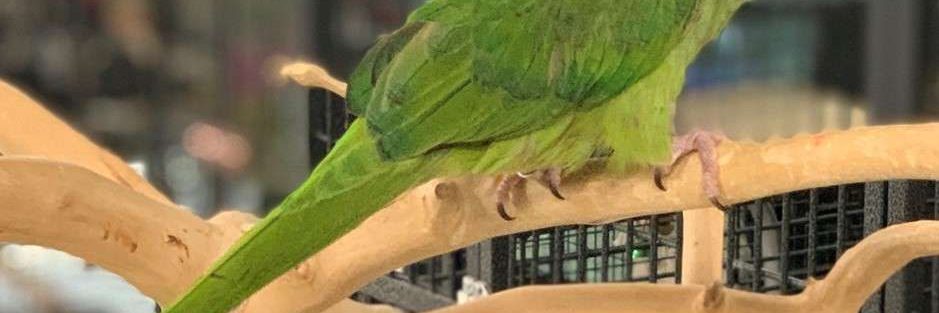
Parrot care for beginners. There are over 350 species of parrots in the world today, and these animals are becoming increasingly popular as pets due to their social nature and long life-span when compared with other pets. While different species of birds have varying life spans, some of our larger parrot species can sometimes live up to 70 years with exceptional husbandry and diet, and appropriate veterinary care. Birds have specific needs in order to thrive both physically as well as mentally, but if cared for appropriately will be a loyal companion for many years. If you are considering getting a parrot or have already welcomed one or more into your home, knowing all you can regarding their care is a necessity. Parrots are a long-term commitment.
The Natural History of Parrots
Parrot care for beginners are consider to be the most intelligent type of bird and some of the most intelligent animals in the world, fascinating humans for over 5,000 years. Bird origins start in the Jurassic Period of the world’s history and were believe to share a taxonomic group with theropod dinosaurs known as the group Paraves . The modern birds that we have in our lives today in a biological class know as Aves, and within the Aves subgroups, the order psittaciformes. This name is where the term Psittacines come from to describe our parrot friends. The is most often found in tropical and subtropical regions like Australia, and South and Central America, but are know to be found on all continents with the exception of Antarctica.
Common Breeds of Parrots
Parrot care for beginners are over 350 different species of parrot in the psittacine family and while they all share the traits of a curve beak and zygodactyl feet, there are specific needs for each of the species. Some of the most popular types of parrots include budgies, cockatiels, cockatoos, African Greys, Amazon, Parrots, Quaker Parrots, Macaws and more. When deciding whether or not a parrot would be a good fit for your home, learning about their environmental, dietary, social, and medical requirements is a must! Common breeds of parrots kept as pets include our smaller birds, Budgies, Cockatiels, Lovebirds, Conures, and also bigger parrots such as African Greys, Amazon Parrots, and Macaws! The age and experience of individuals in your household, room that you are able to give to a parrot, and how much time you are home to socialize with your bird are all considerations.
How to Care for Your Pet Parrot
Parrot care for beginners live exciting and active lives in the wild, so replicating an enriching environment in the home is a must to keep your parrot happy and healthy. If keep outside, supervision is a must and birds need to be brought in or keep in a safe, seal enclosure at night that has no access for predators; the recommendation is to always bring birds inside though for safety and ability to control the environment they’re in. Time spent out of your birds enclosure or dedicate bird-safe room if not caged should be supervise as parrots are great at getting into trouble around the house! They should have time spent out of the cage at a minimum of once a day for exercise, enrichment, and socialization.
Choosing a Parrot Cage

Parrot Care Guide
Parrot Care Tips: Everything You Need To Know
There are over 350 species of parrots in the world today, and these animals are becoming increasingly popular as pets due to their social nature and long life-span when compared with other pets. While different species of birds have varying life spans, some of our larger parrot species can sometimes live up to 70 years with exceptional husbandry and diet, and appropriate veterinary care. Birds have specific needs in order to thrive both physically as well as mentally, but if cared for appropriately will be a loyal companion for many years. If you are considering getting a parrot or have already welcomed one or more into your home, knowing all you can regarding their care is a necessity. Parrots are a long-term commitment.

The Natural History of Parrots
Parrots are consider to be the most intelligent type of bird and some of the most intelligent animals in the world, fascinating humans for over 5,000 years. Bird origins start in the Jurassic Period of the world’s history and were believe to share a taxonomic group with theropod dinosaurs known as the group Paraves . The modern birds that we have in our lives today is in a biological class known as Aves, and within the Aves subgroups, the order psittaciformes found. This name is where the term Psittacines come from to describe our parrot friends. The is most found in tropical and subtropical regions like Australia, and South and Central America, but is know to be found on all continents with the exception of Antarctica.
Common Breeds of Parrots
There are over 350 different species of parrot in the psittacine family and while they all share the traits of a curved beak and zygodactyl feet, there are specific needs for each of the species. Some of the most popular types of parrots include budgies, cockatiels, cockatoos, African Greys, Amazon, Parrots, Quaker Parrots, Macaws and more. When deciding whether or not a parrot would be a good fit for your home, learning about their environmental, dietary, social, and medical requirements is a must! Common breeds of parrots kept as pets include our smaller birds, Budgies, Cockatiels, Lovebirds, Conures, and also bigger parrots such as African Greys, Amazon Parrots, and Macaws! The age and experience of individuals in your household, room that you are able to give to a parrot, and how much time you are home to social.
How to Care for Your Pet Parrot
Parrot Housing
Parrots live exciting and active lives in the wild, so replicating an enriching environment in the home is a must to keep your parrot happy and healthy. If keep outside, supervision is a must and birds need to be in or keep in a safe, seal enclosure at night that has no access for predators; the recommendation is to always bring birds inside though for safety and ability to control the environment they’re in. Time spent out of your birds enclosure or dedicate bird-safe room if not cage should be supervise as parrots are great at getting into trouble around the house! They should have time spent out of the cage at a minimum of once a day for exercise, enrichment, and socialization.
Choosing a Parrot Cage
The size of your parrot cage is the first thing to research, as a small budgerigar will require a much smaller cage than a Hyacinth Macaw! When choosing a cage, you should ensure that your bird will be able to stretch out both wings fully without touching either side of the cage, as well as not having the tail touch the bottom of the cage.
Birds should also be able to fly from one to another. This will help ensure that your bird will have adequate space for safety and mental health purposes. Another consideration is the material that the cage is make out of. Birds should not be keep in decorative cages that were not designe to be safe for birds, as these cages are often not able to withstand the powerful bite of a parrot beak or is make with materials that are toxic to birds. Cages to avoid include cages with a removable coating over the bars due to like lihood of ingestion by your parrots, as well as avoiding cages made of lead and zinc, or cages with very small, thin wires with small gaps in between to prevent injury.
Parrot Cage Set up & Maintenance
In the wild, birds are able to make a mess with their food, eat, defecate and then fly far away from it. Parrots are very sensitive to waste products, molds, and anything that can cause airway irritation. Dumping food and water daily and washing bowls before replacing food is a key part in preventing mold exposure to your parrot. Putting in smaller amounts of food at a time based on how much your bird eats a day is a great way to minimize waste while keeping the cage as clean as possible. Water dishes should be change as often as necessary to ensure your bird’s water bowl is always full with clean water.
Parrot Enrichment and Bird Toys
A variety of perches should be available in at least 3 different sizes and varying materials as well. Allowing a bird to have options helps them to not only have preferences and be expose to variations in their daily life, but also encourage birds to exercise and orient themselves differently base on which perch they are on. Some birds may also prefer certain perches for different activities; they may like chewing on one perch, grooming their beak on another, but are most comfortable just spending time on a different material perch. Toys help keep a bird busy, help with mental health and enrichment, and keep a bird entertain and happy. Parrot Toy should be of only natural materials such as bird-safe paper, untreat wood, and raffia. Toys made of metal, rubber, or plastic should be avoid as the is easily destroy and potentially.
Cage Placement
Parrot care for beginners . When choosing where to place a cage in your home, a few places should be avoide. Keeping cages away from the kitchen is important, especially for individuals who cook often. The kitchen is full of dangers for birds parrots love to explore what their owners is doing, and can get caught on hot stoves, fall into pots of water try to use utensils as toys, or inhale fumes to birds such as those emitt from non-stick Teflon pots or pants. Teflon toxicity can very quickly become fatal in birds, and smoke from heavy cooking can also lead to respiratory tract issues. Avoiding being directly next to a window is also important to ensure that your bird is not trap in hot sun rays or caught in a drafty area. Cages should not be keep in laundry rooms or in areas that are likely.
Parrot Temperature and Humidity
Parakeets were first introduce as pets into the United States in the 1940s, but as more was learn about larger parrots, they increased in popularity as house pets as well. Parrots is wide sprea throughout the world and can be see on every continent with the exception of Antarctica. Knowing that the is see in areas of ambient to warm temperatures means that cage placement also plays a role in your parrot’s daily life and considerations when adding one to your family. Keeping parrots in areas of the home that are not affect by rapid, drastic temperature fluctuations is important, and keeping temperatures in their area ambient or warmer based on where your parrot species is native too but a good start if unsure is keeping your parrot’s area above 70 degrees Fahrenheit. Remember that using a space heater in your birds area can.
Parrot Diet and Nutrition
Parrot care for beginners bivores and can be of as being “vegan”. Birds cannot process dairy or meat products. Parrots not only enjoy having a variety of different veggies, fruits, and fortify pellet. Parrot foods but the need variety in their diet to ensure the nutritional requirements is being meet. In the wild birds have access to a variety of different food types and these foods are in all different nutritional stages of a plants life when picked up by parrots. In captivity birds are prone to obesity. Vitamin and calcium deficiencies and heart disease which is becoming increasingly common in captive parrots.
Diet Percentages
Parrot care for beginners should be provide with a variety of different food options, but proportions are the key to providing your parrot with a healthy diet. While fruits are certainly healthy for your bird and should be provide daily. Ensuring a 70% vegetable to 30% fruit proportion in your parrot’s daily salad is critical to ensure your parrot is not eating too much fruit and taking in too many sugars and not getting in enough veggies. A high-quality pellet only diet should also be provid to your parrot; seed diets are not recommend as nutritionally deficient and high in fats. Treats such as high quality nuts or pellet-nut treats should only be provide in small quantities and when use in training, never given for free as part of the diet. Some species may have special dietary requirements such as lories or lorikeets t
Parrot Behavior
Parrot care for beginners can be quite sweet and playful in nature but they are intelligent birds who need stimulation in order to not be bore and to preserve their sanity. Birds that are not give enough socialization or attention often enough can become frustrate and eventually depress and aggressive. For a mentally healthy and stimulate parrot, and to work on your bond, it is advisable to handle your pet parrot and let it out of its cage at least once daily. As birds are naturally curious about noises, you can leave a quietly playing radio or television show on for them and see which music they respond to. Making sure that all family members involved in parrot handling are holding and playing with a pet parrot appropriately is a key to your bird becoming a feathered family member.
Parrot Noises and Mimicking
The level of noise depends on the species of parrot and its upbringing. Parrots can often be quite loud, and sometimes even scream for attention or fun. Sometimes they make noise depending on the time of day. Many times the larger the parrot, the louder the noise they make, which is why they are unsuitable for most apartment settings. People purchase parrots because of their ability to “speak” or mimick, however not every parrot is guarantee to exhibit this behavior. Many times, human companions can often get their parrot to use words in their correct context like names of family members, or greet them upon entering or leaving the house. This requires a lot of patient training which can take months.
Medical Care for Your Pet Parrot
Parrot care for beginners are a prey species and therefore are very good at hiding their illnesses due to their survival instincts. These instincts encourage parrots to hide illnesses and injuries as long as they physically can, because injuries or illness in the wild is a vulnerability, making them intriguing prey for a predator. Being that birds are effective in hiding their issues, regular 6-month to 1-year avian veterinarian visits, depending on your birds age and health status, are recommen to ensure preventative measures are take to provide your feather friend with a long, healthy, and happy life.
When Should You Bring Your Pet Parrot in for a Checkup?
When you bring home a parrot, be sure to schedule an appointment with an avian pet vet. During the initial exam, the veterinarian will perform a full physical exam, listen to heart, lungs, and sinuses, examine the ears, eyes, nose, beak, and inside the mouth. Recommendations will be for yearly bloodwork and fecal testing and any other concerns will be discuss with the patient’s owners. Weights are take and monitor to compare from each prior visit, and every year care and husbandry will be discusse to make sure the best possible care is being provided both at the avian hospital as well as at home. Behavior, enrichment, and socialization discussions are also an important part of any exam when dealing with any parrot patients.
Common Parrot Health Concerns
There are many common health problems that could affect your parrot. Watch you pet parakeet carefully and make sure to bring them to a vet if you notice any unusual behavior or symptoms. Here are a few things that we commonly see:
Grooming & Boarding
Parrot care for beginners preen their own feathers, but they still need help in grooming themselves. This means taking them to the vet to have their nails trimmed. Wings can be trim properly by your vet if you decide not to have your parrot flighted for safety reasons. Having wings trimming done by a veterinarian is important to avoid over grooming that could result in broken blood feathers and detrimental falls. Beak trims are only necessary if deem so by your veterinarian and can be harmful if done unnecessarily. You can keep your parrot’s beak trim naturally by offering all natural wood toys and perches that they can groom their beaks on themselves.
A Complete Beginner’s Guide
Pet Parrots – A Complete Beginner’s Guide
by Colin Scott
Introduction
The purpose of this article is to provide a complete guide for the new pet parrot owner. Parrots have held in high regar ever since 1504 when the first live parrot was import into the UK, although the Romans keep them as pets long before this. Parrots, give the correct care and attention can be long live and so will provide your household with not just a new pet, but a life-long companion and a new family member.
Cages
This is the first major purchase before selecting your new companion, there are numerous designs and styles available, at various prices, from pet shops. Whilst there are no right or wrong cages, a simple design will be easier to clean and maintain. Remember that your parrot will treat its cage as its own territory, and will happily spend large parts of the day in it, so the cage should be as spacious as possible, and should allow the bird to at least be able to spread its wings. The bottom of the cage needs to be cover with something that can be change regularly, this can be shred paper or wood-shavings, but these tend to get blown about and make a mess around the cage. The best floor covering is old newspaper, this is cheap and readily available so that it can be change daily.
Location of the cage is also very important. Birds are very sensitive to fumes and gases, hence the use of canaries to detect dangerous gases in coal mines. If you notice a smell or fumes move the cage to another room with good ventilation, fumes can arise from cleaning products, aerosol sprays, new paint, cigarette smoke, cooking gas, self cleaning ovens, carbon monoxide from household boilers and car exhausts, etc. Cages should not be position in the kitchen as fumes from everyday cooking can prove fatal.
Cages should not be place in the window or near doorways, because of the risk of draughts, nor should they be place in direct sunlight when the bird may overheat. One essential addition to the cage is a method of securing the door, the best and fool-proof method is by using a small padlock.
Diet or polly filler
Keeping polly happy
Although your parrot’s cage is its castle it should be let out under supervision at least once a day, never leave your parrot out unattend as this can result in chew furniture or wall paper.
A wide range of toys is now available from pet shops the best ones are made from natural products like wood and hemp rope. The purpose of these toys is to give your bird things to chew and destroy, so every day things which can be found around the house are just as suitable, such as, cardboard boxes and empty toilet rolls. Fresh cut branches from non poisonous trees are also require. Also try placing objects such as large pieces of fruit on top of the cage so that the bird has to climb up to get it, thus exercising your parrot.
Selecting your new pet
Always choose a healthy bird – that is one with its feathers held tight against its body, bright eye and lively. Leave the one with its feathers ruffled, and spending most of the time asleep with both feet holding the perch. Many dealers and breeders now offer birds that have been test for certain diseases. If your pet shows these symptoms, seek veterinary advise, and select a vet with avian experience. (See list of avian vets on this website)
In many species the males and females are identical, if you do wish to find out its gender however some vets offer surgical sexing, other firms, which advertise in the bird press offer DNA sexing from a feather. The latter method is the safest for your bird.
Being able to positively identify your bird is very important should it be lost or stole and then recover. The is various ways of permanently marking your bird close rings these is steel bands which are fit around the bird’s leg when the are a small chick. As the birds grow they cannot be remove or fitted to adult birds, these rings often carry the initials of the breeder and the year it hatched. Micro-chips are small electronic chips, about the size of a grain of rice, which are insert into the parrot. These then stay under the skin for the rest of the bird’s life and are read using a scanner which will give a individual numerical letter code.