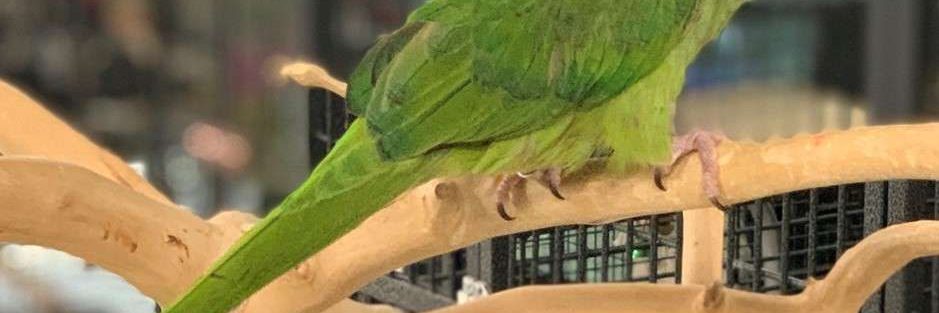
.Macaw parrot care guide. Macaws are among the most striking and intelligent birds in the world known for their vivid plumage, powerful beaks, and larger-than-life personalities. Native to the tropical forests of Central and South America these colorful parrots vary widely in size—from the petite Red shoulder macaw to the impressive Hyacinth macaw which can reach up to three feet in length. With lifespans of 30 to 50 years or more, macaws are long-term companions whether observe in the wild or kept as pets. While some macaw species are thriving, others face threats ranging from habitat loss to illegal trade, making their conservation status an important
How Macaws Behave in the Wild
Smart and social macaws rank among the most intelligent birds and often live together in families and flocks of 10 to 30 in the wild. These groups eat, sleep and travel together sometimes flying many miles from their roosting site searching for food. They broadcast their big personalities to anyone listening, often screaming loudly to communicate with or recognize other flock members mark their territory or intimidate predators or intruders. Flocks of wild macaws in the western Amazon region sometimes land on river banks and eat the damp dirt and clay. While there are a number of theories about this behavior, its cause remains unknown. Some scientists hypothesize that the damp dirt contains minerals and chemicals that help settle the macaws’ stomachs after they eat unripe fruit. Others posit that the clay contains vital levels of sodium that the birds, living far from the ocean, often lack.
What to Know Before Getting a Macaw as a Pet
Macaws retain their big personalities even when they live with people. These birds need very large cages so that they have plenty of room to move around and spread their wings. Stimulating foraging toys and perches with varied textures and widths are also essential for these smart cookies. However even a big cage with plenty of great macaw toys can’t replace out of-cage time with their favorite people. Macaws’ natural intelligence and family flock orientation make regular interaction and play essential. Without these vital connections macaws resort to shrieking and harmful behaviors such as feather-picking. In captivity, macaws still rock their alpha-bird sounds, so if you’re considering adopting one, remember: your life is about to get A LOT noisier! Frequent screaming, though confusing to humans, is a perfectly normal behavior for macaws. The destruction of anything wooden or even mildly interesting is also normal for macaws.
Living with a Macaw: Challenges and Rewards
If you’re ready to share your life with a bold, intelligent, and colorful companion, a macaw might be the perfect pet for you. From the affectionate Green-wing to the stunning Hyacinth macaw, these parrots are known for their ability to learn words, perform tricks, and form strong bonds with their owners. Many macaw owners even report their birds having playful or sarcastic personalities. With the right care, social interaction, and environment, a macaw can bring years of joy, laughter, and vibrant energy to your home. If you’re looking for a unique, long-term pet with personality and charm, becoming a macaw owner could be the exciting journey you’ve been searching for. If you need help finding the best cage, toys, perch or treats for your macaw, call us at
Handling and Grooming
If the bird has been properly socialize by raising it in a nurturing environment with other birds and people, it should adjust well to its surroundings. They must be socialize at a young age and expose to a variety of experiences (veterinary visits, other pets, visitors, wing and nail trims, car rides) to avoid fearful behavior. Most young, hand-raise macaws are very adaptable and easily handle by many people. Begin by teaching your bird to step up onto your finger, and allowing it to become comfortable with you. Toweling large birds is the safest method of restraint. Cover the bird with the towel and use the thumb and middle finger at about ear level to grasp the head while the index finger can go over the head. Lift the bird up and wrap towel around its body.
Reproductive Information
Preening each other and feeding each other regurgitation are signs of breeding pairs Broody behavior can looks like nest building, cage territoriality and aggression as well as rubbing their vent again inanimate objects and people Minimize reproductive behavior by. Don’t groom/pet along back and under wings Don’t play wrestle with the bird’s beak Don’t provide a nesting box Improve nutrition. Do not place your bird on your shoulder or head as it can result in aggression. Provide no more than 12 hours of light. Cover cage if necessary.
Housing
They need plenty of room to move around and exercise, as well as for branches and toys. Minimum size for a macaw 3 feet wide, 2.5 feet deep, and 6 feet high. The wingspan on some larger birds can reach 4 feet in length, so caging should be enough for them to stretch their wings. The bars should be no farther apart than ¾-1.5″ to avoid any chance of injury from head entrapment. The bars should run horizontally to make it easier for the bird to climb around. Use perches of several different diameters to exercise the feet properly. Avoid putting a sandpaper perch in your bird’s cage. If you are bother by sharp toenails, you can try using a special terra-cotta or cement perch which will help keep nails dull without injuring your bird’s tender feet.
Diet
Provide your macaw with a well-rounded diet, and plenty of opportunity to try new things which adds variety and provides psychological enrichment.- Don’t try to hand-feed a very young bird unless you have experience and adequate time to devote to the task. It is safer to leave the baby with the breeder or pet store and visit frequently.
- Start with your basic pelleted diet formulated specifically for macaws, and supplement it with anything healthy such as fresh fruits and veggies.
- Don’t feed avocadoes – they have been associated with toxicity.
- Most foods from the table are okay; just avoid feeding your bird anything high in salt, sugar, or grease.
- Vegetables such as sweet potato, carrots, beets, and corn on the cob are wonderful sources of vitamins and minerals.
- Fresh fruits such as bananas, oranges, grapes, and apples can also be included as a minor portion of their daily diet. Be aware that when fed beets, berries, or cherries the fecal matter may change in color.
- While the bird is still young is the perfect time to introduce a wide variety of foods to its diet.
- Macaws love seeds, even though they’re not the most nutritious foods. Seed mixes designed for macaws are available and usually contain sunflower seeds, a mixture of other high fat seeds, nuts and some dried fruits.
Enrichment
- Macaws are innately curious and intelligent. They love puzzles, and will often work themselves right out of a locked cage.
- Give them interlocking toys parrot puzzle toys–toys with a nut or something that has to be extract anything which may confound them for at least an hour or two.
- Macaws are also destructive chewers and should be given lots of chew toys.
- Untreat lumber cut into chunks are great and you can “dye” the pieces by soaking them in Kool-Aid.
- They tend to love acrobatics and appreciate a swing or a rope to twirl on or something sturdy to climb on.
- Avoid rope toys with loops they can get their head, feet, or wings caught up in.
- Soft plastic should also be avoid as it is easily crush and broken by their powerful jaws and can leave sharp edges making them prone to injury.
Obesity
Common in many captive macawss fed a diet too high in fat or sugar and a lack of exercise.
Obesity can lead to diseases of the heart, liver and pancreas. It can also cause fat deposits to form on the eyes, especially in juveniles if the mother is fed a diet high in fat.
Treatment consists of increasing exercise and change in diet.
Stress
- Stress in macaws can result in self-mutilation of feathers, legs, or wings as well as respiratory distress, and even death.
- Providing proper nutrition and hygiene, normal social groupings, appropriate protection from potential predatory animals can help reduce stress.
Trauma
- Trauma, including bite wounds from dogs and cats, are common and potentially fatal injuries for macaws.
- Macaws can also be injured by household activities such as falling from heights, chewing on electrical cords, or being stepped on.
Blue and Gold Macaw Care Guide
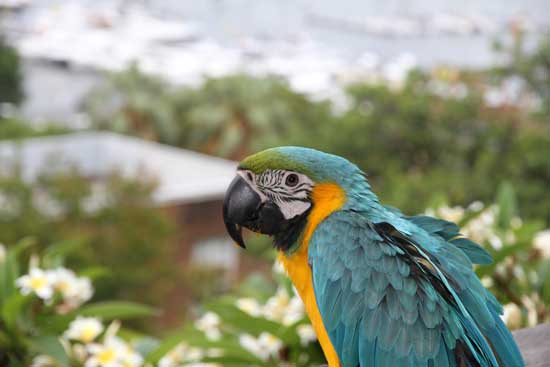
The Blue and Gold Macaws’ sociability and even temperaments make them great pets. They are playful, comical, mischievous, extremely intelligent, and often very warm and loving. They high intelligence given them a willingness to learn and develop a great talking ability. Like most parrots, the Blue and Gold Macaw loves attention from their owners and will form a strong bond with its family.
As they are large birds, and as such are capable of extremely loud vocalizations, because of this, they may not be the best choice for those who live in apartments and condominiums, or that have young children.
Distribution and Habitat of Blue and Gold Macaws
The Blue and Gold Macaw originate from South America, almost the entire northern half of the continent. They are usually seen in pairs or flocks of not more than 20 birds in areas such as open marshlands and woodlands, rainforest, and other areas with large trees. The Blue and Gold Macaws is a large parrot with a green forehead, fading into blue. which covers the nape, back, tail, and wings. The chest and underside of the wings and belly are a bright golden yellow. They have large black beaks, and white patches of skin around their eyes and face. These patches are adorned with rings of tiny black feathers. They are approximately 85 to 90cm in height and have a wingspan of 102 to 112.5cm wide.
Cages for macaws
Blue and Gold Macaws are a very large birds and require a large cage for many toys, perches, food/water dishes, as well as sufficient space for them to move around and spread they wings. This eliminates boredom while caged.
Toys are very important for entertainment; choose thing that will make them think, things they can chew and destroy and some strong durable toys for longevity. Macaws need to have plenty of time daily outside their cage as well. It would be a good idea to look into a specially designated play area that provides them a change of
scenery from their cage or a stand that can be moved around the house as the family moves. Any play area must be baby proofed. They will go after your power cords; they will chew your wooden furniture and anything that is within their grasp. Cages, toys, stands and everything you need for you macaws are available at Birdsville.