
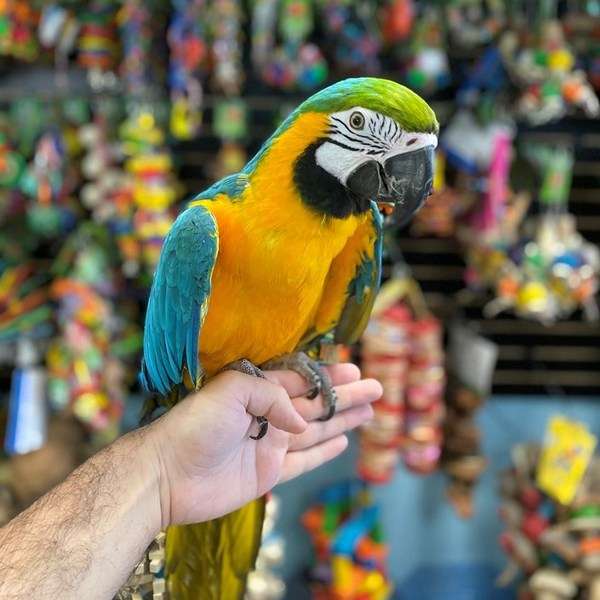
Macaws parrot are not a single species; instead, they are a group of 17 species within the true parrot Psittacidae family. Macaws are beautiful, looking birds with large beaks, bright feathers, long tails, and light or white facial patches. Most of these species are big, friendly, and extraordinarily noisy, although there are a handful of miniature species. They require a lot of space to live healthy, active lives. It is common to deed pet macaws in wills and end of life plans as these birds may outlive their owners, though disease and poor nutrition can shorten their lifespan.
Origin and History
Macaws parrot are large, colorful South American parrots. Europeans learned about these “New World” parrots from Christopher Columbus’ journey logs in the 15th century.
Most species of macaws are endanger (hyacinth, red-front and blue-throated), and a few (the Spix’s macaw and glaucous macaw) are almost certainly extinct. Their dwindling numbers are a result of the loss of their habitat through deforestation and illegal trapping for the pet trade.
1:20
Click Play to Learn 7 Important Things About Owning a Macaw
Temperament
Macaws parrotare playful and active, and they have exuberant personalities that match their size. A well-cared-for macaw that receives appropriate nutrition, mental stimulation, enrichment, attention, and plenty of space for exercise makes a unique, long-lived companion that is affectionate and loyal.
However, their size and personalities can also make them challenging pets. Macaws that are not regularly handle or have hormonal imbalances, drastic environmental changes, or lack of mental stimulation can become aggressive, territorial, destructive, and problematic.
It is best to start training these intelligent birds from birth. Early training should focus on hand-feeding, not nipping or biting, no screaming, and eventually, teaching your bird to talk or sing. As you develop a rapport with your bird, you may even share jokes and enjoy various types of interactive play.
Speech and Vocalizations
https://freddyfeathers.com/parrot-nutrition/Macaws are loud and noisy. Their vocalizations can be more than some people can tolerate, and they can scream when they want to. If you can’t deal with noise or if you have nearby neighbors, then a macaw is not your ideal pet.
They can learn to say words and mimic your speech, but they do not speak as clearly as some other pet bird species. However, with consistent training, the blue-and-gold is the best talking large macaw. The Hahn’s macaw is best talking mini macaw.
Macaw Colors and Markings
There are several species of macaws in the wild, but the ones most commonly in the pet trade are large, colorful macaws. Scarlet, military, blue and gold, and hyacinth macaws are the common pet macaw species. Mini macaws are harder to find but include species such as Hahn’s, Illiger’s, and yellow-collared macaws.
There are so many color variations; macaw plumage seems to include every color of the rainbow. In addition to the 17 species, there are numerous colorful hybrids, including the rainbow macaw, more commonly known as the Catalina.
Macaws are dimorphic, meaning you cannot tell the sexes apart by looking at them. To figure this out, the bird needs genetic testing or a surgical sexing procedure.
Caring for a Macaw
Macaws parrot need a large and durable cage, so be prepare to make a significant investment. Mini macaws can live in a cage sized for Amazon parrots (2 feet by 3 feet and 4 feet tall). Larger macaws will need a cage that is at least 3 feet by 4 feet and 5 feet tall. The cage must be strong enough to withstand the significant beak strength of macaws—a stainless steel or wrought iron cage is a good investment. You will also need to offer your bird a play gym or out-of-cage perch or play stand.
Provide a wide variety of wooden toys or plain, untreated chunks of wood for the bird to chew on a rotational basis. Toys meant to be taken apart to get at a treat are also a good choice, as are hanging toys and toys to climb on.
Macaws parrot can be messy and destructive, so provide heavy-duty toys to divert your bird away from your wooden furniture or other enticements around the house. You can even make your own macaw toys and utilize recyclable, yet safe, materials such as phone books and tissue boxes.
Common Health Problems
Macaws are usually hardy, long-lived birds. Their most significant health issue is not physical but emotional. As intelligent, social beings, macaws are prone to boredom and loneliness. A depressed macaw will self-injure by pulling out its feathers. There are two simple solutions to this problem: Either get more than one macaw or spend a great deal of time interacting with your pet. Either way, you will have a loud, highly interactive home life.
To ensure your pet’s health, find a local avian vet where you can build an ongoing relationship. Your pet should visit the vet regularly to check for any signs of disease or depression.
Diet and Nutrition
In the wild, macaws eat a variety of seeds, plants, fruits, and nuts. As pets, a formulate pellet food should be the basis for your macaw’s diet supplemented with a wide range of healthy fresh fruits and vegetables.
Pellets should comprise 50 percent of their food. Seeds and nuts should be no more than 10 percent of their diet (as they are too high in fat). The rest of the menu should consist of fresh fruit and vegetables.
The average healthy macaw will consume approximately 10 to 15 percent of its body weight daily. For reference, the larger scarlet macaw weighs about 2 pounds. These proportions translate to mean that the bird will eat about 1/2 to 3/4 cup of parrot mix and about 1/2 to 3/4 cup of fruit and vegetables every day. You can feed it once in the morning upon waking and at dusk before it goes to sleep.
You can offer your macaws a small portion of whatever you are eating, as long as it does not include any chocolate, avocado, caffeine, salt, or sugar. These birds tend to like cooked pasta, applesauce, and cereal as
Exercise
Macaws need much more room than a cage will provide to explore, spread their wings, and be mentally and physically healthy. Unless you have a free-flight aviary as its enclosure, plan on your macaw spending more time outside of its cage than in it. Birds are flock species and are also very affectionate, so they require at least 2 to 4 hours of attention from their owners or another bird to be happy.
Where to Adopt or Buy a Macaw
Before you get a macaw, consider your space and time commitment. Frankly, if you don’t have space for a large bird, don’t get one.
Macaws are often available in pet stores, and older birds are usually available for adoption. You can also purchase a macaw from an avian breeder. Some online sources you can try include:
Fun Facts
Macaws are social birds and typically form strong, monogamous pair bonds. They usually nest in the hollows of trees high off the ground or in the sides of cliffs. Both parents defend their eggs and chicks aggressively. They are often seen flying in large flocks and the bond pairs fly close together, their wings nearly touching.
In the wild, macaws often flock to mountains of clay known as “macaw licks.”
When disturbed, these bright birds screech loudly and circle overhead with their long tails streaming.
Macaw are playful and inquisitive and are able to mimic human vocalizations.
Macaws have strong beaks that are perfectly adapted for cracking open and eating a wide variety of nuts and seeds.
Macaws is able to reach flying speeds of up to 56 kph (35 mph).
Ecology and Conservation
In the course of daily feeding, macaws allow plenty of seeds (while eating, as well as in their droppings) to fall to the forest floor, thus generating much of the forest growth.
The main natural predator of macaws is the harpy eagle, but humans have caused more devastation to macaw populations.
In addition to damage done by rain forest habitat destruction, humans also hunt macaws for their plumage, meat, and for the pet industry.
Macaws are popular pets, but potential owners should be well informed and prepared. Many macaws, such as blue & gold macaws, are targeted for pet trade.
Bird collectors pay thousands of dollars per bird. Smugglers take the eggs or young birds and sell them pet stores.
Macaws sold as pets must be hatched and hand-raised in the U.S. If not, they were likely smuggled in illegally. Buyers should also be aware that these birds are long-lived, often living several decades. Macaws also demand a great deal of time and attention and require daily interactions.