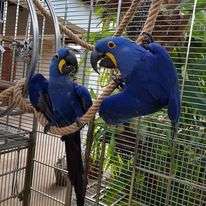
Hyacinth Macaw is one of the most magnificent parrots in the world, known for its striking blue feathers, impressive size, and gentle personality. Often called the “gentle giant” of parrots, the Hyacinth Macaw is highly intelligent, affectionate, and capable of forming strong bonds with its owner.
This comprehensive Hyacinth Macaw care guide covers everything you need to know, including diet, housing, behavior, lifespan, health care, and daily maintenance.
What Is a Hyacinth Macaw?
The Hyacinth Macaw (Anodorhynchus hyacinthinus) is the largest flying parrot species in the world. Native to South America, these beautiful birds are recognized for their deep cobalt-blue feathers and bright yellow skin patches around their eyes and beak.
Hyacinth Macaw Overview
- Scientific Name: Anodorhynchus hyacinthinus
- Common Name: Hyacinth Macaw
- Size: 40 inches (100 cm) long
- Weight: 2.6–3.7 pounds
- Lifespan: 40–60 years (sometimes longer)
- Personality: Gentle, affectionate, intelligent
- Noise Level: Loud but manageable with training
- Difficulty Level: Advanced bird owners
These parrots require dedication, patience, and proper care to thrive in captivity.
Hyacinth Macaw Appearance and Physical Characteristics
Hyacinth Macaws are easily recognizable due to their vibrant blue plumage and large black beak. Their striking color and large size make them one of the most admired parrots worldwide.
Key Features
- Deep cobalt-blue feathers
- Bright yellow eye rings
- Yellow skin patches at the base of the beak
- Extremely powerful curved beak
- Long, elegant tail feathers
- Strong feet designed for climbing
Their powerful beak is capable of cracking very hard nuts, making proper feeding essential.
Hyacinth Macaw Personality and Behavior
Hyacinth Macaws are known for their gentle and affectionate temperament. Unlike some other large parrots, they tend to be calmer and more predictable.
Personality Traits
- Highly social and affectionate
- Intelligent and curious
- Loves attention and interaction
- Forms strong bonds with owners
- Can become bored without stimulation
- Requires daily mental enrichment
These birds enjoy playing with toys, learning tricks, and interacting with their human family.
Hyacinth Macaw Diet Guide
A proper diet is essential for maintaining the health and longevity of your Hyacinth Macaw.
What Do Hyacinth Macaws Eat?
A balanced diet should include:
1. High-Quality Pellets (Main Diet)
Pellets should make up 60–70% of their diet.
Benefits:
- Provides balanced nutrition
- Prevents vitamin deficiencies
- Supports healthy feathers
2. Fresh Fruits and Vegetables
Offer daily fresh produce such as:
Safe fruits:
- Apples
- Bananas
- Mango
- Papaya
- Berries
Safe vegetables:
- Carrots
- Sweet potatoes
- Leafy greens
- Bell peppers
- Broccoli
3. Nuts (Essential for Hyacinth Macaws)
Hyacinth Macaws require high-fat nuts because of their natural diet.
Best nuts:
- Macadamia nuts
- Brazil nuts
- Walnuts
- Almonds
- Coconut
Nuts should be given in moderation due to high fat content.
4. Foods to Avoid
Never feed:
- Chocolate
- Avocado
- Alcohol
- Caffeine
- Onion
- Garlic
- Salty foods
These foods are toxic to parrots.
Hyacinth Macaw Cage Requirements
Because of their size, Hyacinth Macaws need large and strong cages.
Recommended Cage Size
Minimum cage dimensions:
- Width: 48 inches
- Depth: 36 inches
- Height: 72 inches
However, larger cages are always better.
Cage Setup Tips
Include:
- Heavy-duty perches
- Stainless steel food bowls
- Large toys
- Climbing ropes
- Chewable wood toys
Hyacinth Macaws have powerful beaks, so all cage materials must be durable and safe.
Hyacinth Macaw Exercise Needs
Daily exercise is essential for both physical and mental health.
Exercise Recommendations
- At least 3–4 hours outside the cage daily
- Provide safe climbing areas
- Rotate toys regularly
- Encourage flying in safe environments
Lack of exercise can lead to obesity and behavioral problems.
Hyacinth Macaw Training and Socialization
Training helps develop positive behaviors and strengthens the bond between bird and owner.
Training Tips
- Start training early
- Use positive reinforcement
- Reward with treats
- Teach simple commands
- Encourage step-up training
These birds are intelligent and can learn words, sounds, and tricks.
Hyacinth Macaw Lifespan
Hyacinth Macaws are long-lived birds that require a lifetime commitment.
Average Lifespan
- 40–60 years
- Some exceed 70 years with proper care
Providing proper nutrition and veterinary care helps extend their lifespan.
Common Health Problems in Hyacinth Macaws
Regular health monitoring is essential.
Common Health Issues
- Psittacosis
- Feather plucking
- Nutritional deficiencies
- Beak disorders
- Respiratory infections
Health Care Tips
- Schedule regular veterinary visits
- Provide balanced diet
- Keep cage clean
- Monitor behavior changes
- Provide mental stimulation
Early detection of illness improves survival chances.
Hyacinth Macaw Grooming Guide
Proper grooming keeps your bird comfortable and healthy.
- Nail trimming
- Beak monitoring
- Feather care
- Regular bathing
Bathing can be done using:
- Mist sprays
- Shallow bowls
- Bird-safe showers
Hyacinth Macaw Noise Level
Hyacinth Macaws can be loud but are often calmer than other large parrots.
- Loud calls when excited
- Vocal during interaction
- Can be trained to reduce noise
Owners living in apartments should consider noise tolerance.
Hyacinth Macaw Enrichment and Toys
Mental stimulation prevents boredom.
- Wooden chew toys
- Puzzle toys
- Rope toys
- Foraging toys
- Hanging toys
Rotate toys weekly to keep interest high.
Hyacinth Macaw Cost of Ownership
Owning a Hyacinth Macaw is expensive.
- Initial purchase: High
- Cage setup: Large investment
- Monthly food cost: Moderate to high
- Veterinary care: Essential
- Toys and accessories: Ongoing
Potential owners should budget carefully.
Is the Hyacinth Macaw Right for You?
These birds are best suited for experienced bird owners who can provide:
- Daily attention
- Spacious housing
- Proper diet
- Long-term commitment
- Financial stability
They are not ideal for beginners due to their demanding care needs.
Fun Facts About Hyacinth Macaws
- Largest flying parrot species
- Can crack extremely hard nuts
- Highly intelligent birds
- Native to Brazil and surrounding regions
- Known as gentle giants
These facts make them one of the most fascinating parrot species.
Hyacinth Macaw Habitat and Origin
Hyacinth Macaws originate from South America, especially regions of:
- Brazil
- Bolivia
- Paraguay
They typically live in:
- Tropical forests
- Palm groves
- Savannah regions
Understanding their natural habitat helps recreate a suitable environment in captivity.