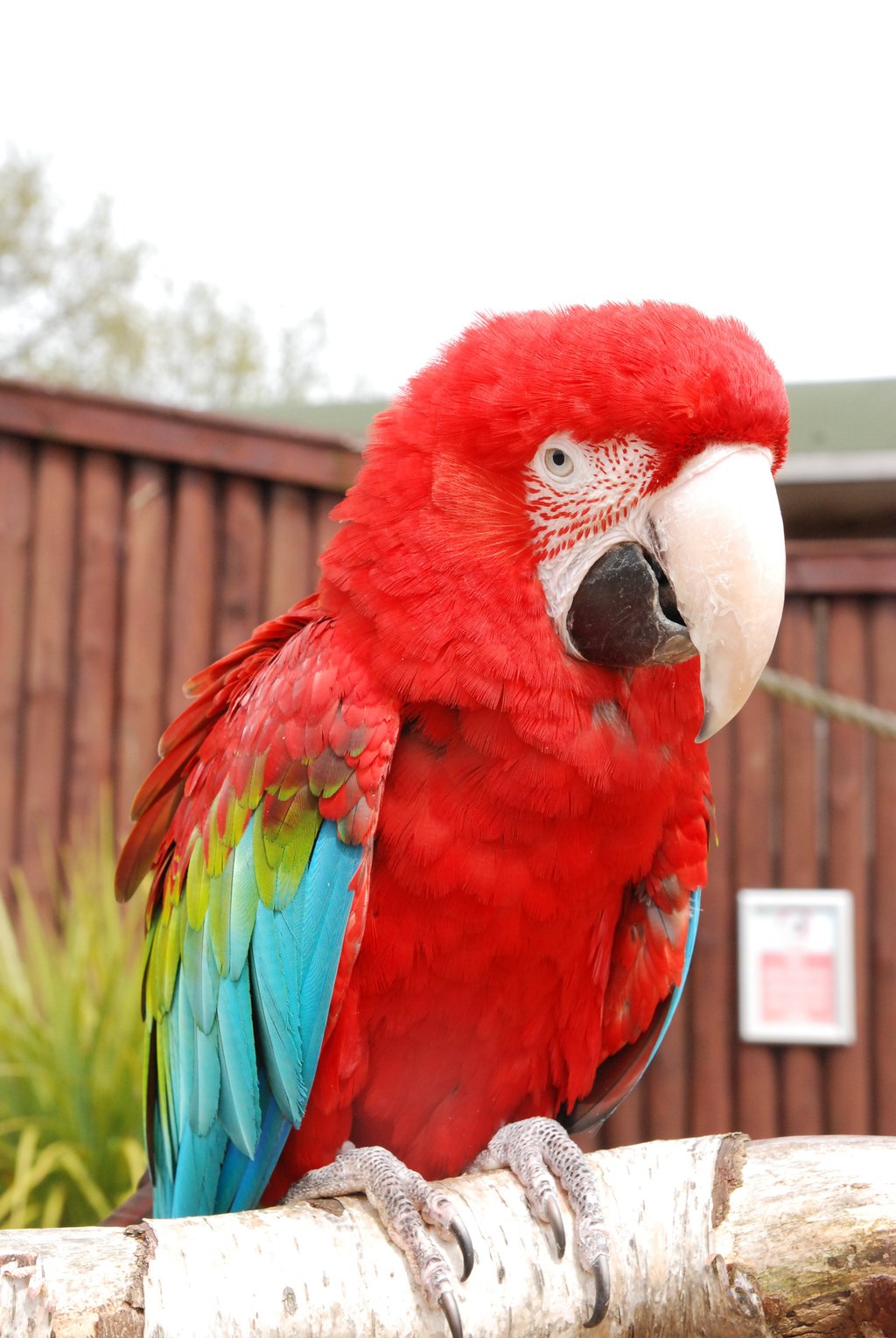
Green-winged macaw is a large mostly-red macaw of the Ara genus, and are easily confuse with the scarlet macaw, which in contrast, have yellow instead of green on their wings. They are the largest of the Ara genus, and are found in the forests and woodlands of northern and central South America. However, along with other macaws, in recent years there has been a mark decline in its numbers due to habitat loss and illegal capture for the parrot trade.
Description
Green wings Macaw can be readily identify from the scarlet macaw as whilst the breast of both birds is bright red, the upper-wing covert feathers of the red-and-green macaw are mostly green but can occasionally sport a few yellow feathers above the band of green (as oppose to mostly yellow, or a strong mix of yellow and green in the scarlet macaw). In addition, the red-and-green macaw has characteristic red lines around the eyes form by rows of tiny feathers on the otherwise bare white skin patch; this is one of the biggest differences from a Scarlet Macaw to the casual viewer. Iridescent teal feathers are surround by red on the tail. If seen together, the red-and-green macaw is clearly larger than the scarlet macaw as well.
Behavior
The green-winged macaw generally mates for life. The female typically lays two or three eggs in a nest made in a hole in a tree. The female incubates the eggs for about 28 days, and the chicks leave from the nest about 90 days after hatching.
Diet
In the wild, these birds eat a variety of foods, including nuts, fruits, seeds, and occasionally vegetable matter. Like other macaws and birds, they eat clay to help digestion.
Captivity
Red-and-green macaws are common pets, both legally and illegally. Some are gentle and others can be aggressive. Many hobbyists have decide to make hybrids of red and greens and other macaws, such as the harlequin, Buffwing, calico, ruby, cameo, flame, Maui Sunrise, quatro, tropicana, rubilina, jubilee, and fiesta macaws.
Re-introduction program
Aves Argentinas, a partner of BirdLife International is leading the re-introduction of the species in Argentina. The bird which has not been see for some years and is list as critically endanger in Argentina was release in Iberá Provincial Reserve (Spanish: Reserva Provincial Iberá) in the north-eastern province of Corrientes. The birds are from zoos and breeding centres in Argentina and were release in 2015.