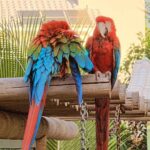
Catalina macaw, sometimes known as the rainbow macaw is a first generation hybrid between the blue-and-gold macaw and scarlet macaw. As catalina macaws are hybrids, they do not have a true scientific name. The best way to represent these birds in taxonomy is by the expresion.
Catalina macaw
The Catalina macaw is named after Catalina Bird Park, formerly located on Santa Catalina Island, California, at which this hybrid was first produced in captivity, in 1940. It is a first-generation hybrid between the blue-and-yellow macaw and scarlet macaw. There is speculation that the first hybrid macaw was the Catalina macaw. Hybridization of macaws can occur naturally or in captivity. However, most Catalina macaws are the result of selective breeding. Therefore, they rarely occur in the wild on their own. Breeders have selected the blue-and-gold macaw for its friendly nature, whereas the scarlet macaw is known for its striking beauty. This combination has created the much sought-after Catalina macaw, with its bright coloration and charming personality. In bird breeding, the father’s genes are often dominant. Therefore, the male is usually the scarlet macaw, whereas the female is the blue-and-gold macaw.
Descriptio
Catalina macaws generally weigh 2–3 pounds and can reach up to 35 inches (89 cm) in length from the beak to the tip of the tail feathers. Their wingspan reaches 40–45 inches. The average Catalina lives up to 60 years in captivity. The chest, abdomen, and back are usually orange or yellowish with greens and blues on the wings, with the coloration most strongly influenced by the father’s genes. They have a white chin with black patches around it, and their beak is usually gray. They are physically similar to Harlequin macaws but have a long tapering tail. Their bright coloration is due to pigments and structural colors in the feathers. Are the pigment responsible for the bright red, orange, and yellow colors. Therefore, the coloration of the feathers can be an indicator of their overall health. However, blues and greens are not produced by any pigment. Instead, the color blue observed on the Catalina (as well as all birds) is a structural color, whereas the green coloration found in Catalinas is produced by a combination of blue structural colors and yellow pigments.
Behavior
Like most macaws, the Catalina macaw can learn words and phrases over its lifetime. Although less impressive talkers than some other parrots, this bird can say up to 15 words or expressions. They are also highly vocal birds and will get loud and scream if they are excite bore or trying to communicate. The Catalina macaw is loud because it is very social and likes to interact with people and other birds. Their screams have been registered to reach decibels,comparable to a live rock concert or a jackhammer.
Macaws live in flocks in the wild. In the absence of a flock, the Catalina macaw recognizes its caregivers as. It will try to communicate with its caregiver like it would communicate with its flock in the wild. Therefore, captive macaws will often use “contact calls” if left alone. Wild macaws do this to reconnect with the rest of the flock if they are lost or alone. These yells progressively become louder in captive Catalina macaw with long periods of separation. Therefore, Catalina macaws is not recommend for people who live in apartment buildings or are frequently away.
Diet
The Catalina macaw has the same diet as most macaws. Since macaws are active birds, they need lots of food rich in oils and calories to meet their needs. A balanced diet includes a variety of seeds, plants, fruits, and nuts. Furthermore, it is possible to purchase good parrot mix from pet stores. However, these mixes are best used if also complement with fresh fruits and vegetables. Fruits that are good to feed include apples, pears, plums, cherries, grapes, bananas, mangoes, papayas, and berries. Vegetables that are good to feed include carrots, sweet potatoes, cucumbers, zucchini, and leafy greens.
Catalina Macaw: Bird Characteristics and Cares
The Catalina macaw is a rainbow-color hybrid parrot that is desire for the traits it shares with its parents—two of the most popular macaw species. Its flashy colors make it highly attractive for prospective parrot owners. However, it is often its comical personality, intelligence, and the ability to respond to training that seals the deal.
Origin and History
This breed was form by crossing a blue and gold macaw with a scarlet macaw. Catalina macaws is found mainly in captivity. You seldom find a naturally bred Catalina macaw in the wild.
In bird breeding and hybridization, the father’s genes are most often dominant. Catalina macaws most often look like scarlet macaws, since the male is usually a scarlet.
The Catalina is a first-generation macaw hybrid, derived from two naturally occurring or “true” birds. Due to its beauty, some breeders use it to breed various second-generation hybrid macaws, those resulting from at least one hybrid bird. It’s also common to find second-generation Catalinas bred from two Catalina parents.
The Catalina has contributed its genes to many colorful macaw hybrids:
Temperament
Owners of hybrid macaws get the best attributes of both parent species. Scarlet macaws is know for being curious, feisty, and very active. In contrast, blue and gold macaws are more laid-back and gentle, and they’re also great talkers. Catalina macaw owners describe their birds as a perfect mix of the two.
Every bird, regardless of species, will have a unique personality that reflects its upbringing. Catalinas can be cranky with demanding social needs or extremely affectionate and charming, bringing fun to their adopted family.
The birds is likely to be social and accepting of people when introduce to a variety of individuals upon first being brought home. This species can be a good family pet if the children are not too young. Teach mutual respect between the bird and the children from the start.
Macaw Colors and Markings
Catalina Hybrid macaws is mainly bred for their color traits. Catalina macaws exhibit a wide range of colors and patterns, with slight differences from one generation to the next.
Most of these birds are primarily red or deep orange on their chests and bellies. Some have striking red-orange heads, while others have a stunning blue-green crown. They typically have green and blue feathers running down their backs and long tails. Many have gold feathers edging their wings and tails.
The Catalina looks similar to the harlequin macaw and the two hybrids are often mistake for one another. The most notable difference is the Catalina’s long, tapering tail, characteristic of the scarlet.
There is no visible difference between male and female Catalina macaws. To distinguish them, a DNA test, chromosomal test, or surgical sexing is require. The DNA test is the least invasive method.
Caring for the Catalina Macaw
Caring for the Catalina Macaw As social birds, they require ample bonding time with their owners to become happy, well-adjust pets. If you plan to adopt a Catalina macaw, ensure you have at least 2 to 4 hours daily to dedicate to your bird. These parrots thrive on interaction and can become depressed and destructive if neglect or ignored.
Like all large parrots, these birds require a spacious cage that is at least 4 feet wide and 5 feet high. The more space provided, the better for the bird. Supply ample perches and toys to keep it engaged.
Prospective owners should carefully consider macaw ownership. Are you prepare to be awaken early every morning by a screaming parrot? Can you accommodate several hours of daily socialization and exercise? Consider the costs: veterinary bills, high-quality feed, toys, and cages. If you can’t provide your bird with the best, consider postponing adoption until you can. The more you spoil a parrot, the better your pet ownership experience will be.
Catalina Macaw Diet and Nutrition
Catalina Macaw Diet and Nutrition In the wild, macaws eat a variety of seeds, plants, fruits, and nuts. Like any large parrot, feed a Catalina macaw a diet that includes a high-quality seed and pellet mix, along with fresh bird-safe fruits and vegetables. Each macaw, depending on its size, will eat about 1/2 to 3/4 cup of parrot mix and about 1/2 to 3/4 cup of fruit and vegetables every day. You can feed it once in the morning upon waking and at dusk before it goes to sleep.
Fruits that are good to feed to macaws include apples, pears, plums, cherries, grapes, oranges, bananas, mangos, papayas, and berries. Healthy vegetables include carrots, sweet potatoes, cucumbers, zucchini, and leafy greens. Never feed avocado; it is toxic to birds. As a treat, offer nuts like macadamias, walnuts, pecans, almonds, and filberts.